

Lower-Secondary Mathematics
The stage where the foundations for the exam years are built or quietly missed. Tutoring for students for roughly ages 11 to 15.
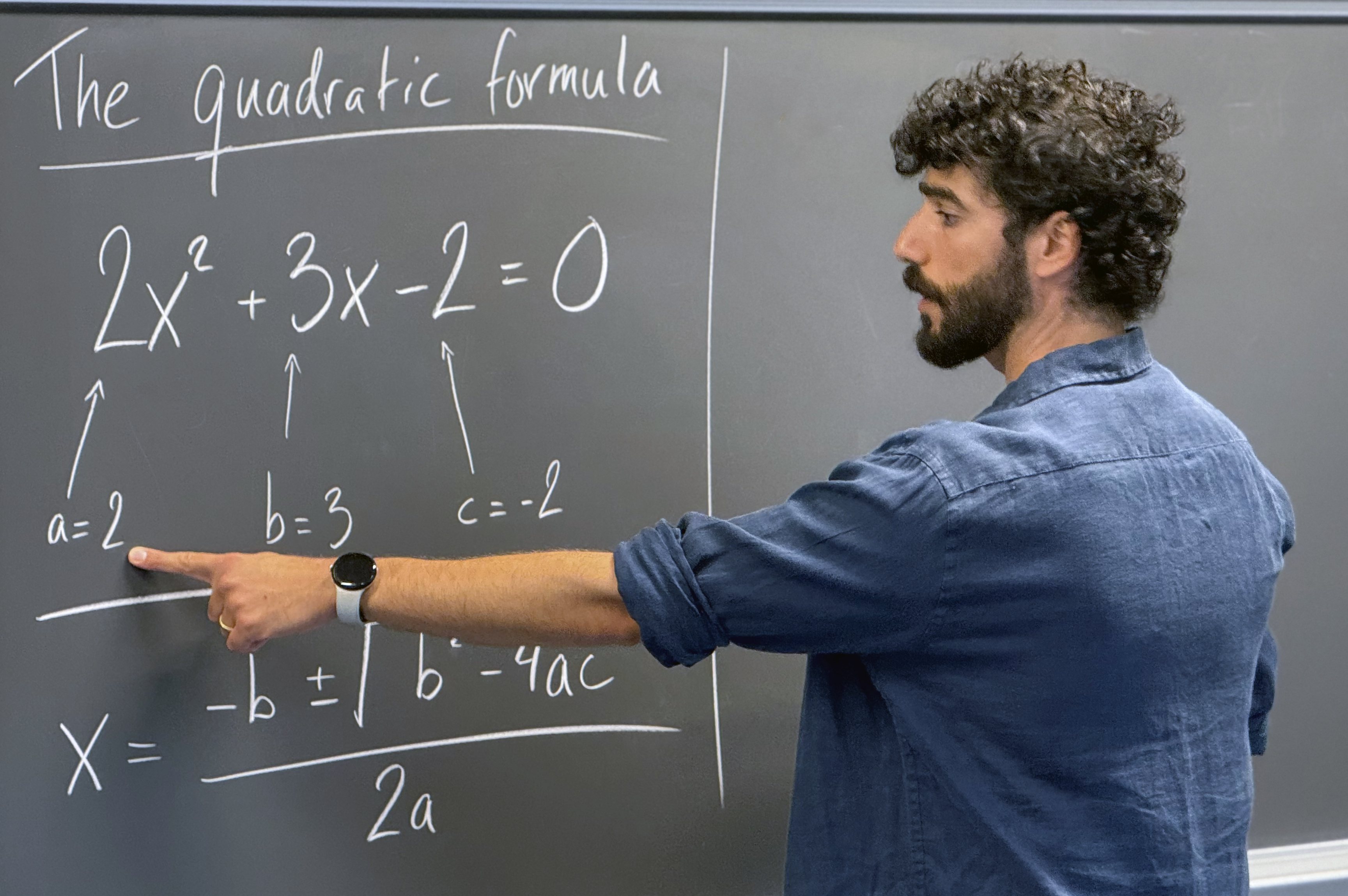
Lower-secondary maths looks gentler than the exam years, but it’s the stage that quietly decides how those years go. It’s where arithmetic gives way to algebra and where letters start standing in for numbers. It is also where a good number of students lose the thread without anyone noticing until much later.
The stage that matters most
Almost every gap that surfaces at exam level was opened here. A student who never quite understood fractions, or negative numbers, or what an equation actually is, can carry that unseen for years. At that stage, the students cope through the easy material but then hit a wall once the mathematics stops forgiving a shaky foundation. Because most of my teaching is at that exam-level end, I know which of these foundations matter most later. I spend my time with the students who wish they’d nailed them at thirteen. Getting them right now is some of the highest-value work there is.
Who it’s for
Two kinds of student, really. The one who’s started to slip and needs the ground steadied before the gap widens. Caught early, this is very fixable. And the one who’s perfectly capable and simply ready for more: a curious student who wants stretching, or one working towards a selective entrance exam who needs their maths genuinely solid rather than merely passable. Families already working with me for an older child often bring a younger one for the same reason. It’s far easier to build a foundation than to rebuild one.
How it works
At this age the work is as much about how a student thinks as what they can do. Building the habit of reasoning a problem through instead of reaching for a half-remembered rule, and keeping their confidence steady as the mathematics turns more abstract. Lessons stay patient and start from where a student actually is, and I’m straight with parents about what I’m seeing. Because a small gap dealt with now is a great deal kinder than the same gap met in an exam hall years later.
Include the student’s year group, curriculum, current topic, and what feels difficult right now — so I can prepare properly for the consultation.
⚡ 0