

What to send before a tutoring lesson
A short guide for parents on what's genuinely useful to send ahead of a lesson, and what you can safely leave alone.
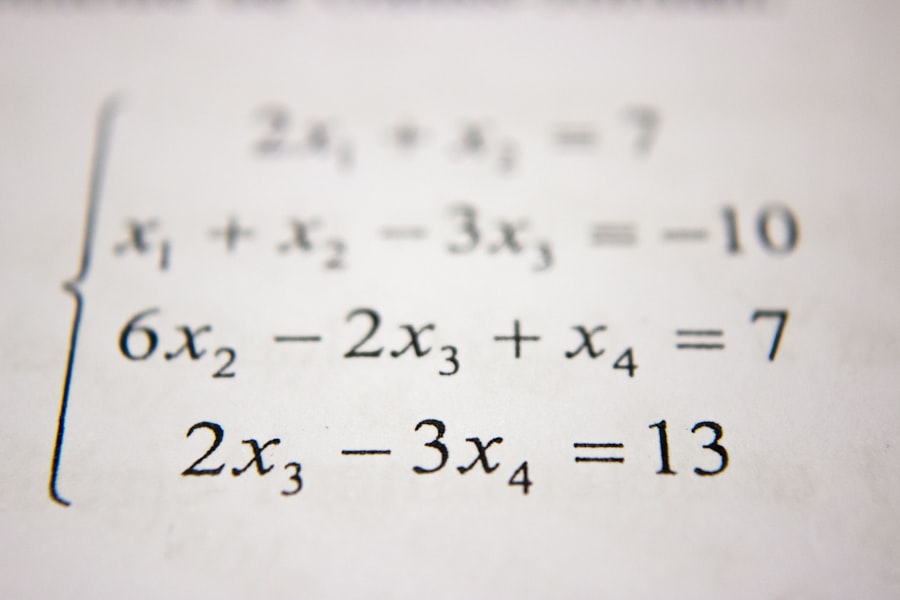
Parents often ask me what they should prepare before a first lesson. The honest answer is: less than you think. But there are a few things that make a real difference to how quickly I can be useful, and they’re all things you already have. Here’s what helps.
The last test, with the marks still on it
If you send me one thing, send this. Not the good test. The one that went badly.
A marked paper shows me more in five minutes than an hour of conversation can. I can see which questions were attempted and abandoned, where the working stops, whether marks were lost on the mathematics or on the reading of the question, and whether the same error appears in three places or only once. That last distinction matters enormously. One error is bad luck. The same error three times is a belief that needs correcting, and it’s usually fixable in a single lesson.
Please don’t have your child copy it out neatly first. The crossings-out are the useful part.
Current homework or class notes
A photo taken on a phone is completely fine. It doesn’t need to be a scan, and it doesn’t need to be complete. Two or three pages of recent work tells me how your child sets out their thinking, which is often where the problem actually lives.
If there’s a piece of homework due soon, say so. We may or may not use the lesson on it, but I’d rather know it’s hanging over the week.
Where they are in the course
The topic name is enough: “quadratics”, “differentiation”, “vectors”. If you can add the course and level, better still, because the same topic looks quite different across curricula. A photo of the textbook page or the syllabus section removes any remaining guesswork.
If there’s a test coming, tell me the date. It changes how I’d use the time.
What’s actually worrying you
This is the part parents tend to leave out, and it’s often the most useful thing in the email.
You might be worried about the grade. You might be worried that your child has stopped trying, or has decided they’re not a maths person, or is fine in class but falls apart in tests. These are different problems with different solutions, and they aren’t visible in a marked paper. Two or three sentences in your own words is plenty.
It’s also worth telling me if your child’s view differs from yours. It frequently does, and knowing that in advance saves me finding out awkwardly in the first ten minutes.
What you don’t need to do
Don’t tidy anything up. Organised folders are lovely and tell me nothing. I want to see the work as it actually is.
Don’t diagnose. “I think she’s missing the fundamentals” might be right, but you don’t have to be right for the lesson to work. Send the evidence and let me do the diagnosis.
Don’t wait until you have everything. If all you have is a photo of one bad test and a sentence about what’s worrying you, send that. Waiting a week to assemble a complete picture costs more than an incomplete picture ever will.
Don’t chase your child for it the night before. If getting the material together turns into a row, the lesson starts on the back foot. I’d rather begin with nothing than begin with that.
Timing and format
The evening before is enough. Photos, PDFs, or scans by email all work equally well.
For in-person lessons, your child can simply bring the folder, and often that’s easier than sending anything. For online lessons, anything sent ahead is genuinely helpful, because passing paper back and forth over a video call is slow.
And if you send nothing at all
That’s fine too. We’ll start with whatever your child brings, or with a blank page and a conversation. It takes a little longer to find the real hang-up, but we get there.
The material just gets us there faster, and the first lesson is worth more when it isn’t spent on reconnaissance.
Include the student’s year group, curriculum, current topic, and what feels difficult right now — so I can prepare properly for the consultation.
⚡ 0